 Platinum Detailing
Cookie Preferences
We use essential cookies to ensure our website functions correctly. No tracking or advertising cookies are used. By continuing, you accept our use of essential cookies.
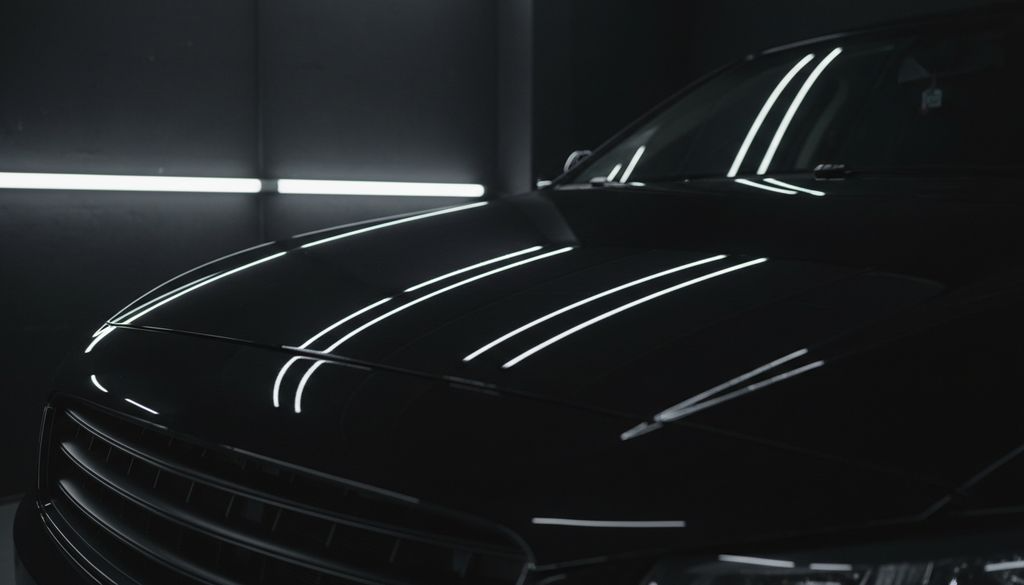
Take the damage out before you seal it in.
- Where
- Yelberton Trading Estate, Paignton
- Correction from
- from £220
- Coating
- Quoted per vehicle
A ceramic coating is transparent and it lasts for years. Applied over swirl marks and wash damage, it preserves them for the life of the coating — and removing them later means taking the coating off first. On a used car the correction is not an upsell. It is the part that decides the result.
Every car arrives having been washed by someone else. Automatic washes, sponges, drying towels and a few years of weather leave a finish that looks acceptable in daylight and shows everything under inspection lighting. That is what comes out first.
What that looks like on a car with a few years behind it is easier shown than described — see corrected cars, or read how correction actually works before you spend anything.
Three levels, by how far the paint has to come back.
Correction is not one job at one price. Which level suits depends on the condition of the paint and how much clear coat there is to work with — not on what the car is worth.
Single Stage Enhancement
Entry-level correction. Removes the majority of light swirls and wash marks, and restores gloss, clarity and depth to the paint.
Two Stage Correction
A cutting stage followed by a refining stage. Takes on deeper defects that a single pass leaves behind.
Platinum Signature Correction
The full process: 3000-grit wet sanding, cut and refinement, taken to a glass finish. Reserved for paint that warrants it.
Four stages, and none of them are skippable.
The order matters more than the products. Each stage exists because the next one fails without it.
-
01
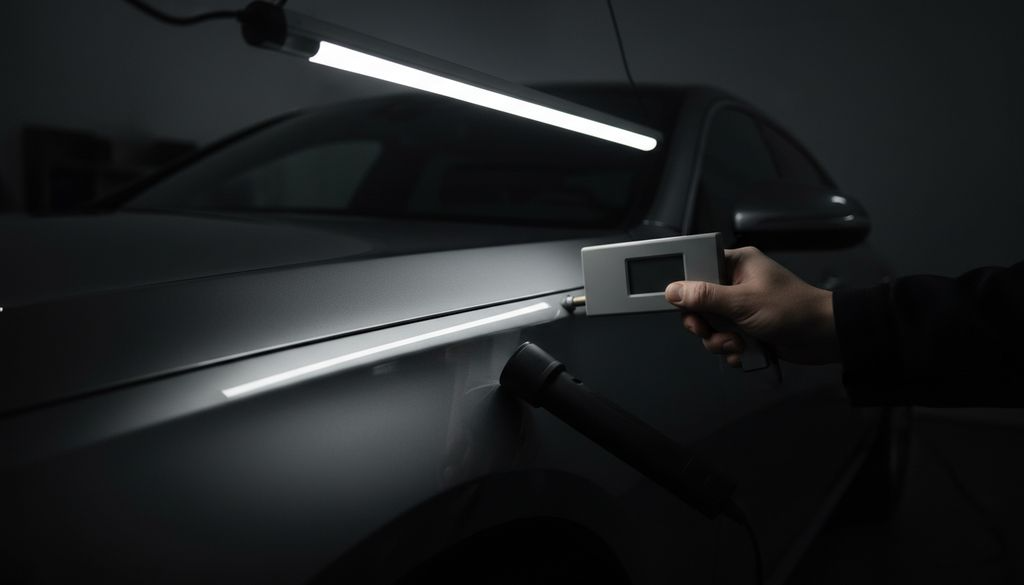
Assessment and paint readings
Depth readings across the panels before anything is cut. Clear coat is finite and previous repairs or a machine polish by someone else may already have taken some. That reading decides how far correction can safely go.
-
02
Decontamination
Tar, glue and bonded iron particles are drawn out chemically, then a clay bar lifts what is left. Polishing over embedded grit drags it across the paint.
-
03
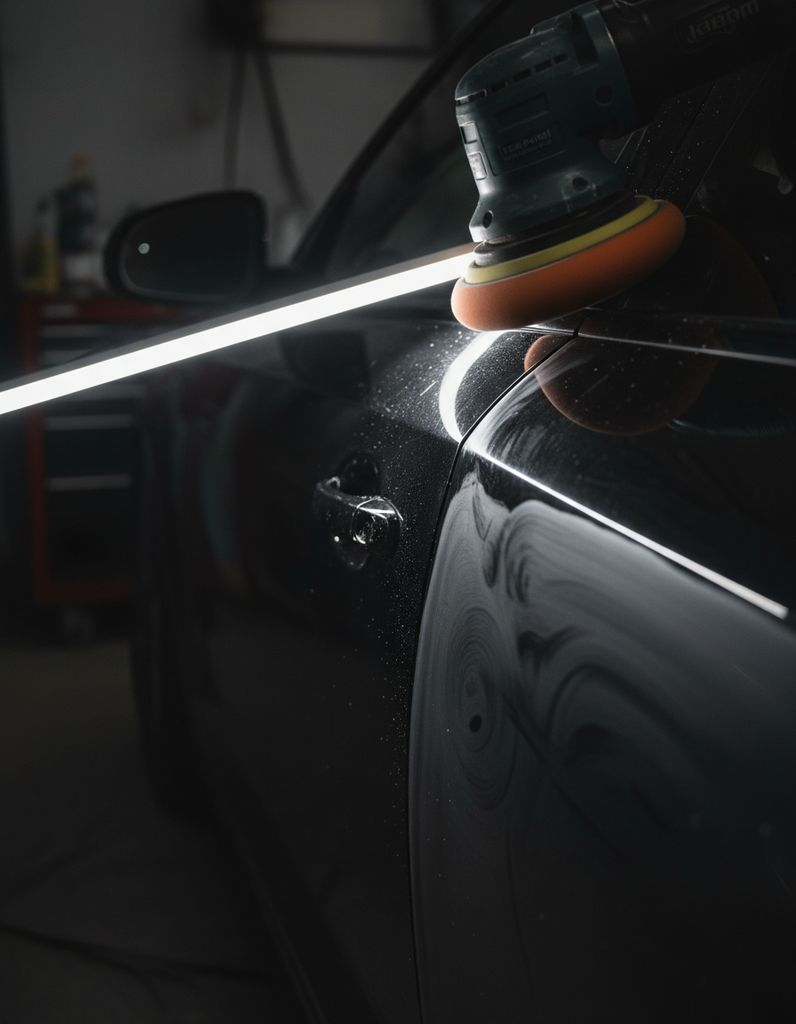
Machine correction
Defects are cut back on a test panel first to establish the least aggressive combination that works. Swirls, wash marks and oxidation come out; the finish is then refined to remove any haze the cutting stage leaves behind.
-
04
IPA wipedown
Polishing oils are stripped from every panel. Oils can temporarily fill fine defects — removing them shows the true corrected finish, and lets the coating bond to bare clear coat.
Then lock the corrected finish in.
Once the defects are out, the coating makes it far easier to keep them out. Dirt releases cleanly rather than keying into the surface, which is what makes regular washing safe rather than destructive. Both options are Gtechniq, applied by an accredited installer.
Gtechniq Crystal Serum Light
A professional-only coating that cures hard over the corrected paint. Two years of chemical and UV resistance, and a surface that gives dirt far less to hold on to.
Applied by accredited installers only
Ask which one suits the car→Crystal Serum Light + EXO V4
Crystal Serum Light forms the base. Gtechniq EXO V4 layers over it for water behaviour and gloss the base coat alone does not give you. Worth doing on a car you have just corrected and intend to keep.
up to 5 years layered over Crystal Serum Light
Ask which one suits the car→Wheels, to three depths.
On a used car the wheels have usually had the hardest life of anything on it. Polishing before coating is the difference between protecting the finish and protecting the damage.
Faces only
Coating on the visible faces. Brake dust sits on top instead of bonding in, so a wash removes what previously needed chemicals.
Faces polished, then coated
The faces are machine polished before coating. On a used car this is usually the sensible option — wheels collect marks and dulling that coating alone would seal in.
Wheels off
Wheels come off the car so faces and barrels can both be polished and coated. The inner barrel collects the most and gets cleaned the least.
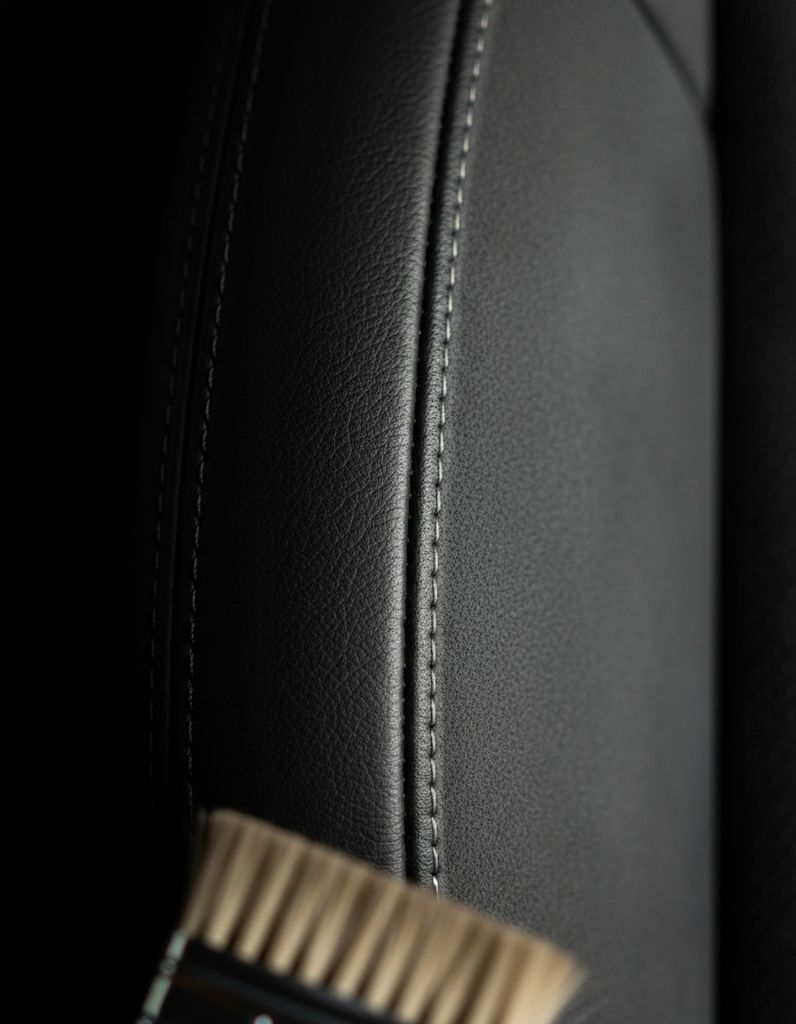
The two things you actually sit behind.
Paint is what other people see. Glass and interior are what you see every time you drive it — and on a used car both have usually been neglected longer than the paint has.
Glass Coating
Windscreen — Gtechniq G1 Clear Vision
Above roughly 40mph, rain clears the glass without wipers. Rated at 12 months.
All windows — Gtechniq G1 Clear Vision
The same coating on every window. Side glass is where wet-weather visibility fails first, because wipers never reach it.
Interior Options
Interior detail
IncludedIncluded with every Used Car Protection package. Vacuum, surface clean and glass.
Full interior deep clean
Quoted per vehiclePlastics, leather, fabrics and carpets taken back properly. On a car with a few owners behind it, this is usually where the biggest visible gain is.
Ask about this optionInterior protection
Quoted per vehicleLeather and interior coating, carpet treatment and dash treatment. Most worthwhile on light leather and high-wear bolsters.
Ask about this optionQuestions we get about used cars.
Car less than three months old? New Car Protection covers the same coatings, with lighter preparation.